User / Staff category
Roles, Departments & Permissions in the Proplix User / Staff flow
A staff account only becomes operationally useful when the business can control what that person is allowed to do. In the verified Proplix build, that control sits around staff, roles, departments, custom fields and related admin structure. This is what turns a simple user account into a managed internal position inside the business workflow.
That is why permissions should never be treated as a small technical detail. They are one of the biggest reasons businesses choose a more serious platform. The stronger the role model is, the easier it becomes to protect sensitive areas, reduce mistakes, preserve accountability and give each team the tools they actually need without flooding them with irrelevant access.
Verified current build
What this category actually covers
This category explains the verified Proplix staff-control layer around roles, departments, permissions and related internal governance.
This category explains the control layer of the User / Staff account. It is where Proplix moves from generic user access into real internal governance.
Exact feature areas in this part of Proplix
This explanation layer is written for the public website, but it stays grounded in the verified current Proplix feature structure already reflected by the help centre.
- Staff account governance through verified role and department structure.
- Permission-aware access around different parts of the Proplix platform.
- Custom fields and related internal admin controls for staff data.
- Cleaner separation between internal teams, functions and responsibilities.
- A stronger basis for operational accountability and controlled access.
How this workflow behaves in practice
Rather than treating an internal user as only a login, Proplix uses the staff account as part of a broader internal operating model with structure, visibility and responsibility.
01
Define the staff role
The business decides what kind of internal user the new account is meant to be and what level of responsibility they should carry.
02
Place the account in the right internal structure
Departments and related admin controls help position the user inside the wider organisational setup.
03
Restrict or expand platform access
Permissions determine which areas of Proplix the user should be able to see, edit or manage.
04
Keep internal governance cleaner
A properly structured staff account reduces access confusion and makes the operating model easier to control as the team grows.
Linked verified guidance
These help pages are already part of the verified Proplix help centre and support the same staff-related flow explained on this public page.
A controlled view for each participant
How Roles Departments And Permissions fits into dependable property operations
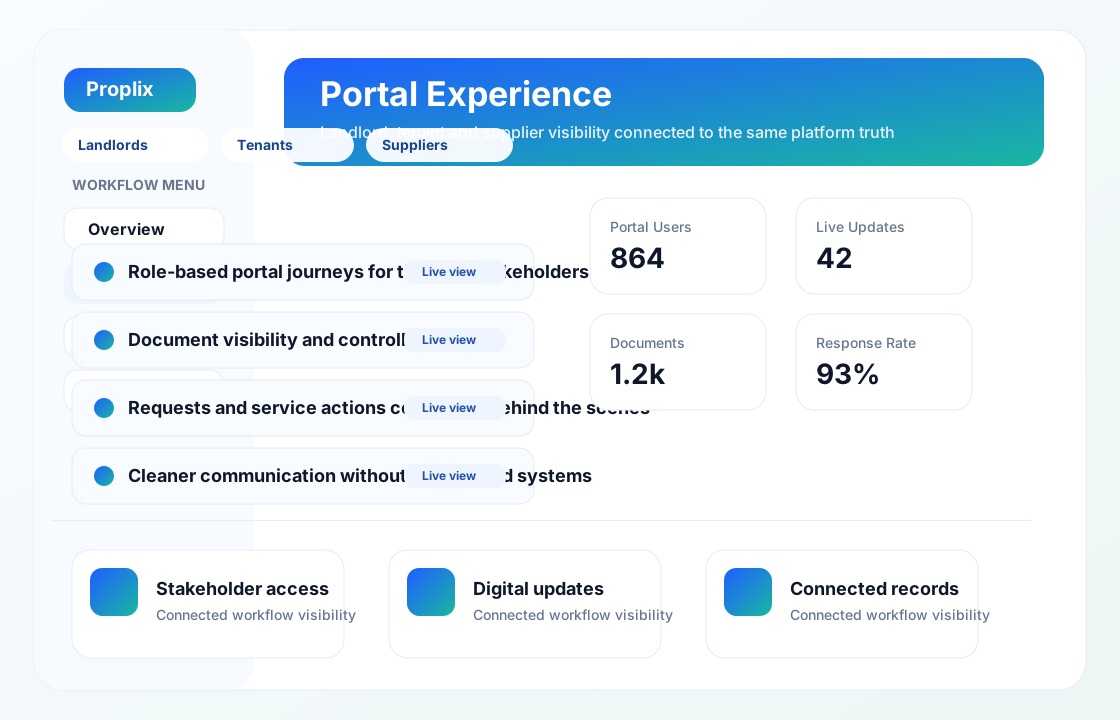
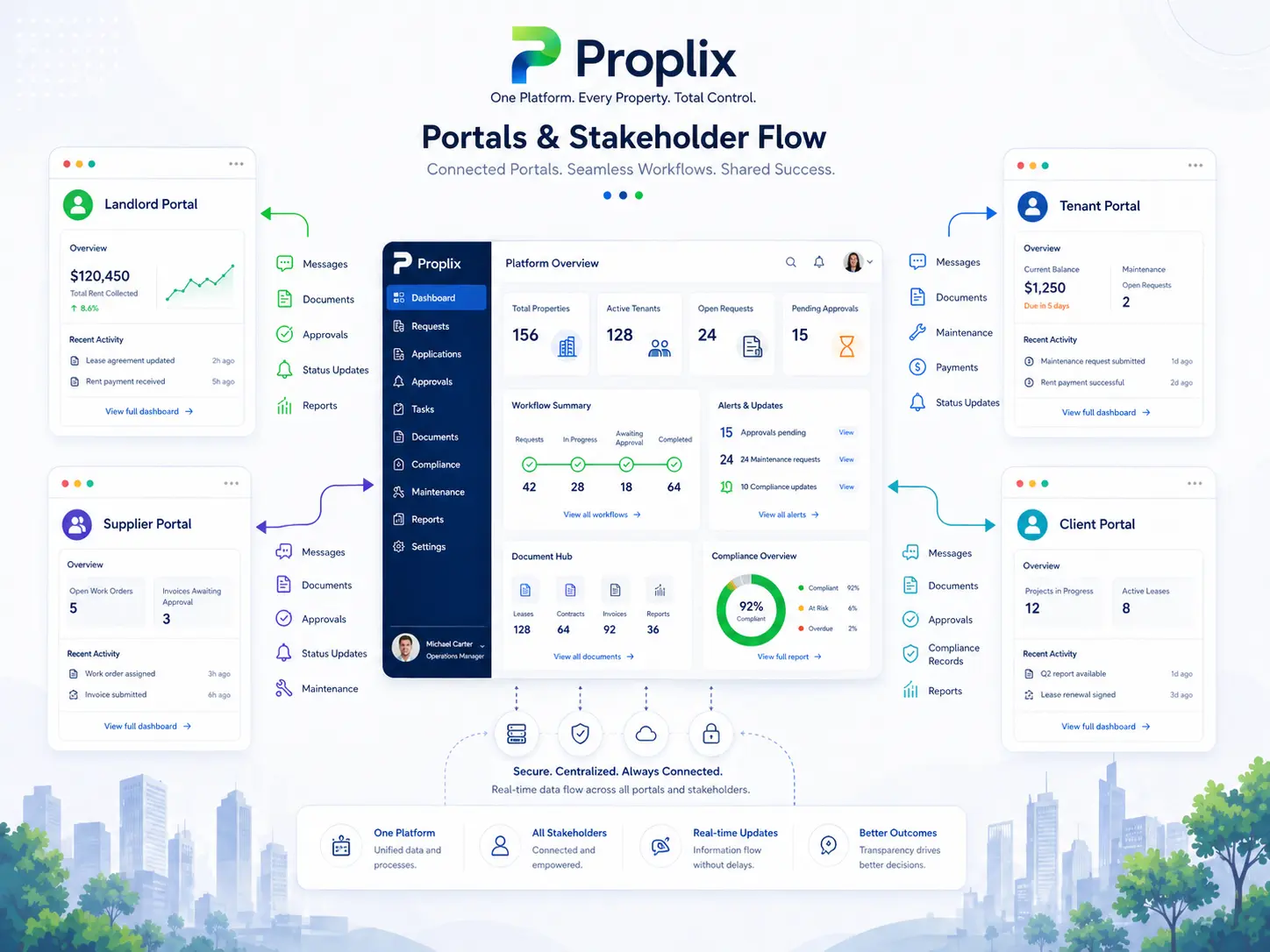
Useful software should make the real operating position easier to understand, including where information is incomplete or a decision is still pending. A portal should not be a second disconnected database. It should present an authorised view of the same property operation so that a request, document, decision or update remains connected with the internal record that staff use.
Give each role enough context to act
Different participants have different reasons for signing in. A tenant may report a repair, a landlord may review portfolio activity, a supplier may update a job and a staff member may need wider operational context. Permissions must follow those responsibilities precisely. For Roles Departments And Permissions, that means access should follow an evidenced business need and change when responsibility changes.
Keep the reason beside the action
Good portal workflow confirms what was submitted, who now owns it and what the participant should expect next. Internal teams should receive enough context to act without asking the user to repeat information already supplied through the portal. This makes the Roles Departments And Permissions record more useful during absence, escalation, service review or a later audit.
Design for the case that does not fit
Property work includes incomplete forms, late evidence, changed instructions, unavailable suppliers and circumstances requiring discretion. The system should expose those exceptions, preserve notes and direct them to an authorised person instead of silently forcing a misleading “complete” status.
Configure from representative work
Before launch, test ordinary and awkward journeys with representative users, including missing evidence, incorrect selections, delegated access and closed cases. Clear labels, accessible forms and reliable failure messages matter as much as the visual design. Document what remains outside the system as well, so teams understand the boundary between Proplix, connected services and professional responsibility.
Measure whether the work is improving
Review successful task completion, repeat contact, abandoned journeys, response times and permission-related incidents. A portal is useful when it removes uncertainty while preserving human support for situations that do not fit the standard route. Review findings with the people completing Roles Departments And Permissions work, because a dashboard may not reveal the manual workaround being used beside it.
Keep guidance, permissions and records current
Ownership, legislation, services and internal policies change. Schedule periodic checks of access, templates, notifications, integrations and retained information. Record material changes and brief affected users so the configured workflow continues to reflect the organisation’s approved way of working.
Proplix supports structured workflow and evidence handling; it does not provide legal advice or remove the need for competent human review. Discuss your organisation, migration or integration requirements through the central secure enquiry route.
Discuss Roles Departments And Permissions requirements →What a well-run Roles Departments And Permissions process should make clearer
A member of staff opening the record should be able to understand its purpose, current status, owner and next meaningful action without first asking several colleagues for background. That does not mean every case follows an identical path. It means the agreed route is visible, departures are explained and supporting material remains beside the decision it informed. For Roles Departments And Permissions work, clarity is especially important when the case moves between teams or returns after a period of inactivity.
The day-to-day experience should also make uncertainty honest. Missing evidence, a disputed instruction or a review awaiting specialist input should be shown as an exception, not hidden behind a reassuring colour or forced completion state. Managers can then direct attention where it is useful, while staff retain a record of the checks already completed. This approach supports a more natural conversation with landlords, tenants, suppliers, clients and colleagues because updates come from a current operational record rather than a hurried reconstruction.
Good information design reduces unnecessary detail without removing useful context. Labels should use the language the organisation actually understands; permissions should reflect real responsibilities; and notifications should be reserved for events that require awareness or action. When every minor system event generates an alert, important work becomes harder to see. A considered Roles Departments And Permissions configuration therefore balances automation with judgement and gives authorised users a practical way to explain, reassign or escalate unusual work.
Implementation is not finished when data has been imported or users have received a login. Teams need time to test live examples, compare the configured route with policy, correct weak source information and agree how questions will be handled after launch. Early reviews should look for duplicated entry, private spreadsheets, unclear ownership and steps that users routinely bypass. Those observations are useful evidence: they show where the design, training or operating decision still needs attention rather than placing all responsibility on the person using the system.
Over time, the organisation should be able to show whether Roles Departments And Permissions work is becoming easier to complete and easier to explain. Useful evidence may include fewer avoidable chasers, faster retrieval, more complete handovers, better-quality submissions and a smaller backlog of unresolved exceptions. Measures should be read alongside real cases and user feedback. Proplix provides the connected workspace for that improvement, while accountable people remain responsible for policy, professional decisions and the service ultimately delivered.