For property managers
Run maintenance, records, stakeholder updates and portfolio readiness with more clarity
Proplix supports property managers who need a more structured way to coordinate daily operations, supplier work, compliance activity and portfolio-level service delivery.
Day-to-day workflow control
Keep requests, updates, jobs, records and notes easier to follow and act on.
Compliance readiness
Link the operational side of the portfolio to the compliance side for stronger overall visibility.
Longer-term reporting
Create better foundations for branch, manager and contractor performance visibility.
Property manager workflow
How Proplix supports the real operational needs of property managers
Property managers need more than a simple tenancy list or a reactive maintenance log. They need one connected environment that helps them oversee properties, tenancies, landlords, maintenance, compliance, documents, communication, supplier coordination and day-to-day service performance across the portfolio. This section explains how Proplix supports that broader operational picture.
For many property managers, the real challenge is keeping control as the portfolio grows. Jobs, compliance tasks, landlord expectations, tenant issues, evidence, reporting and contractor work all overlap. Proplix is stronger when it is positioned as the operating environment that brings those responsibilities together with clearer workflow and stronger visibility.
Property records, portfolio structure and unit visibility
Property managers need cleaner portfolio structure so the team can understand units, linked people, documents and operational status without hunting across separate systems.
- Property and unit record management
- Portfolio-level visibility across assets
- Linked landlord and tenant context
- Property-linked documents and notes
- Cleaner internal reference points
- Reduced scattered record handling
- Better portfolio oversight
- Stronger long-term record continuity
Landlord service and relationship continuity
Property management depends heavily on landlord trust, which is why relationship visibility, service history and portfolio context matter across the account lifecycle.
- Landlord profile and account context
- Linked portfolio visibility
- Communication history and relationship memory
- Service continuity across team members
- Cleaner account handling
- Improved landlord confidence
- Reduced fragmented communication
- Better long-term retention support
Tenant lifecycle, occupancy and service management
Property managers need a more connected tenancy picture so occupancy, service issues, notices and ongoing communication remain easier to understand and support.
- Tenant and occupancy record visibility
- Tenancy-linked communication history
- Move-in to active-tenancy continuity
- Renewal and notice-aware workflow
- Cleaner lifecycle management
- Reduced fragmented tenancy handling
- Better service continuity
- Stronger operational memory
Maintenance, repairs and contractor coordination
Maintenance is one of the most visible parts of property management, so it needs to sit inside the same platform as properties, tenancies, landlords and supplier activity.
- Maintenance request intake and triage
- Priority-led job progression
- Supplier and contractor allocation
- Images, notes and update continuity
- Completion and service record visibility
- Improved stakeholder awareness
- Reduced communication gaps
- Stronger control over active jobs
Supplier management and outsourced work visibility
Property managers often depend on external contractors, so supplier workflow needs better structure and easier visibility inside the same operating environment.
- Supplier record and allocation visibility
- Linked job and update continuity
- Work-status context across suppliers
- Cleaner outsourced-job handling
- Improved accountability
- Better internal and external coordination
- Reduced service fragmentation
- More professional contractor workflow
Compliance Monitor and risk-sensitive oversight
Property managers need compliance to stay close to the wider portfolio picture so safety records, tenancy obligations and evidence remain easier to track and act on.
- Safety certificate and renewal awareness
- Tenancy compliance handling
- Approved-record and evidence continuity
- Property-linked risk visibility direction
- Review and audit support
- Cleaner operational follow-through
- Improved manager confidence
- Stronger regulatory posture
Document management, evidence and operational history
Property managers handle a high volume of property, tenancy, maintenance and compliance documents, so those records need to stay accessible and connected to the right context.
- Property-linked document visibility
- Tenancy and compliance evidence continuity
- Maintenance images and supporting files
- Cleaner operational chronology
- Reduced folder sprawl
- Better internal reference value
- Improved review and dispute support
- Stronger professional record handling
Landlord, tenant and supplier portals
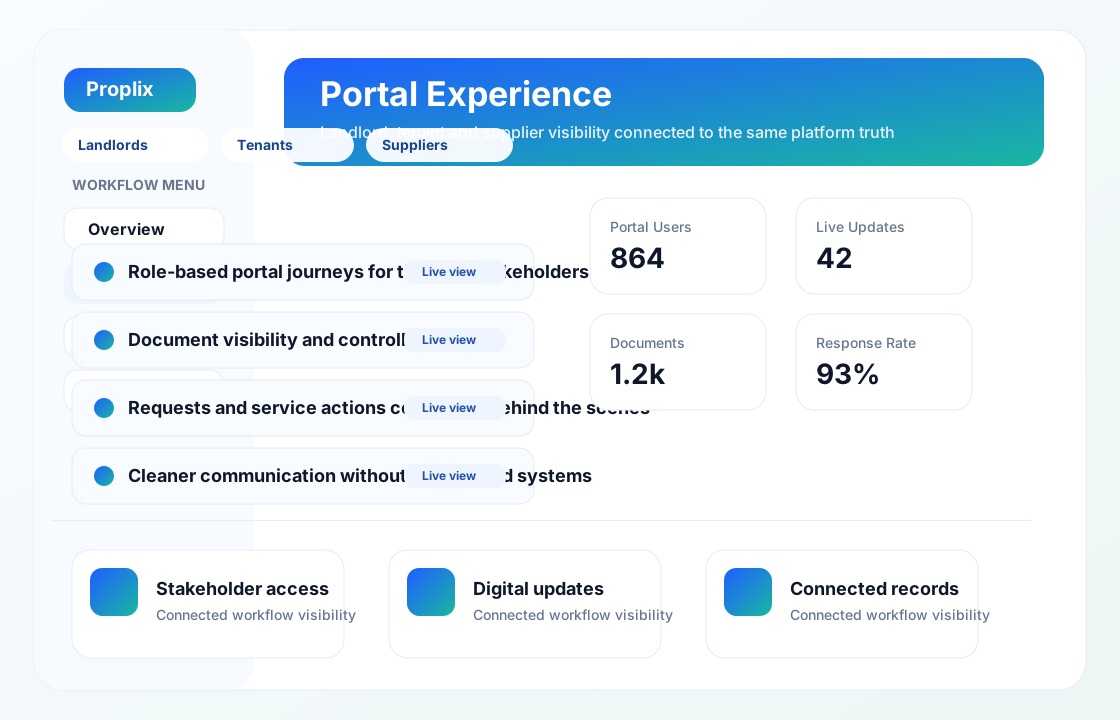
Portal-led service can improve property management by giving the right stakeholders clearer visibility into the information and actions that matter to them.
- Landlord portal relevance
- Tenant-facing service workflow support
- Supplier job interaction alignment
- Cleaner communication pathways
- Reduced friction across service delivery
- Better external visibility where appropriate
- More professional customer experience
- One connected stakeholder environment
Tasks, reminders and internal accountability
Property management teams work better when tasks, reminders and operational ownership are structured clearly rather than spread across inboxes and manual notes.
- Task assignment and ownership visibility
- Reminder and deadline support
- Status-led workflow progression
- Cleaner team handover
- Reduced missed actions
- Manager oversight of active workload
- Improved service discipline
- More accountable daily workflow
Reporting, portfolio intelligence and management visibility
Property managers need stronger reporting around service activity, compliance exposure, maintenance pressure and overall portfolio health.
- Portfolio-level visibility direction
- Service and maintenance insight support
- Compliance and risk reporting context
- Manager dashboard value
- Cleaner operational decision support
- Better awareness of pressure points
- Improved accountability across the team
- More informed management decisions
Migration from fragmented property management workflow
Many property managers still operate through a mixture of spreadsheets, old software, inboxes and disconnected records. Proplix is more valuable when it is positioned as the platform that replaces that fragmentation.
- Migration and onboarding discussion support
- Data and document transition direction
- Cleaner move away from disconnected workflow
- Reduced duplication across systems
- Improved adoption potential for teams
- Better rollout confidence
- Stronger operational consistency after launch
- More scalable portfolio management structure
Why Proplix suits property managers
Property managers need one platform that keeps service delivery, records, maintenance, compliance and stakeholder visibility connected. That is where Proplix becomes more useful than a stack of separate tools.
- Brings core property operations into one environment
- Connects properties, people and workflow more clearly
- Improves service visibility for teams and stakeholders
- Reduces fragmented administration
- Supports better compliance and evidence control
- Strengthens daily operational oversight
- Improves professionalism across the service model
- Creates a stronger platform for long-term growth
Property management in one place
Property managers work better when portfolio workflow and service delivery stay connected
For many property managers, the real difficulty is not any one task on its own. It is the overlap between maintenance, landlord expectations, tenant communication, compliance pressure, document handling and portfolio oversight. Once those responsibilities spread across different tools, visibility weakens and the operation becomes harder to control properly.
Proplix is stronger for property managers when it is understood as a connected operating environment for properties, tenancies, maintenance, compliance, portals and daily workflow. That makes the solution more practical, more scalable and more commercially useful for teams managing live property portfolios with ongoing service responsibilities.
Frequently asked questions
Frequently Asked Questions
Practical answers to common questions from UK letting agents, landlords, property managers and operational teams evaluating this area of Proplix.
Who is the Solutions – Property Managers page really for?
The solution pages are designed to speak to a specific audience while still showing how that audience fits into the wider Proplix platform story.
Why does Proplix use solution pages as well as feature pages?
Because buyers often think first in terms of their role or business model rather than in software categories. Solution pages help them understand why the platform matters to them specifically.
Is this written for the UK property market?
Yes. The solution routes are intended to feel relevant to British property operators and the practical pressures they manage day to day.
Can a landlord still find this useful if they are not technical?
Yes. The content is designed to stay human, practical and easy to understand, even when the wider product story is operationally detailed.
Does this page replace the feature pages?
No. Solution pages help explain relevance by audience, while feature pages explain the platform capabilities in more direct operational terms.
How does this support the one-window product message?
The solution page should show how a particular audience benefits from one connected operating environment rather than a scattered collection of tools.
Is Proplix suitable for growing agencies?
Yes. The solution content is written to support the idea that Proplix can help growing agencies move into a more structured and more professional operating model.
Why is there so much content on this page?
Because a serious buyer needs enough context to understand why the route matters. Thin solution pages do not build much trust or commercial confidence.
Can I move from this page into a commercial proposal or contact easily?
Yes. Solution pages are intended to support the wider website journey and make the next step into a commercial proposal, registration or contact feel natural.
Which related workflows should I review?
It is usually best to compare the related feature routes, portal routes and commercial proposal page next so you can see how the audience-specific story connects to the broader platform value.
Platform illustration
A visual view of property management control
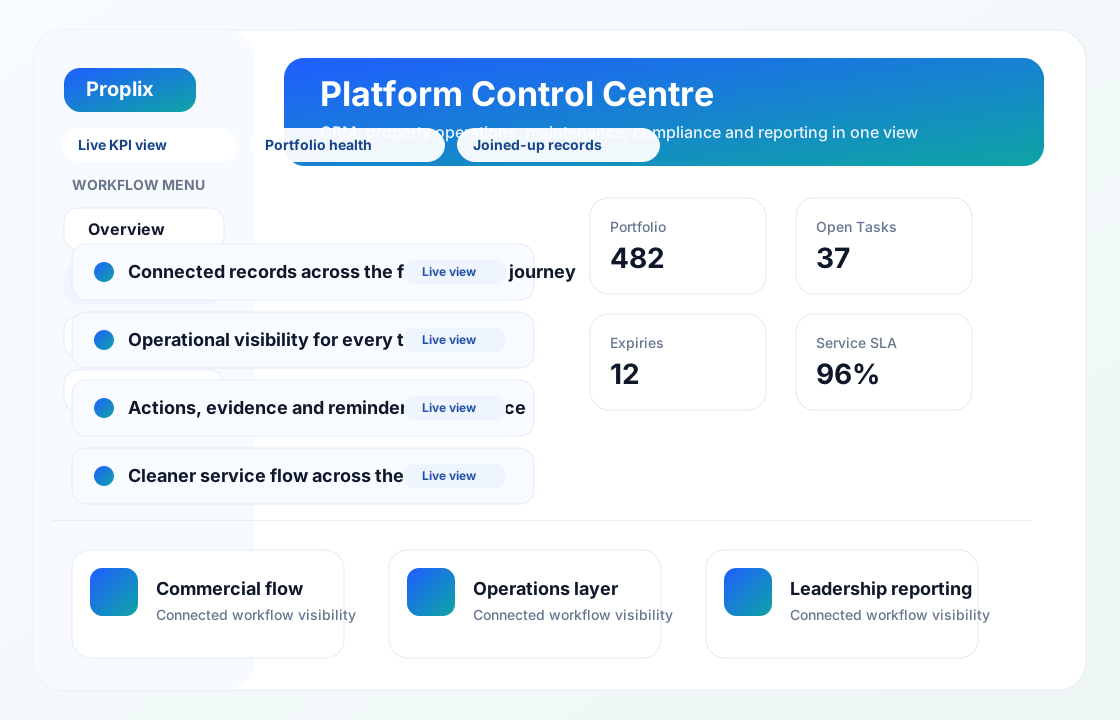
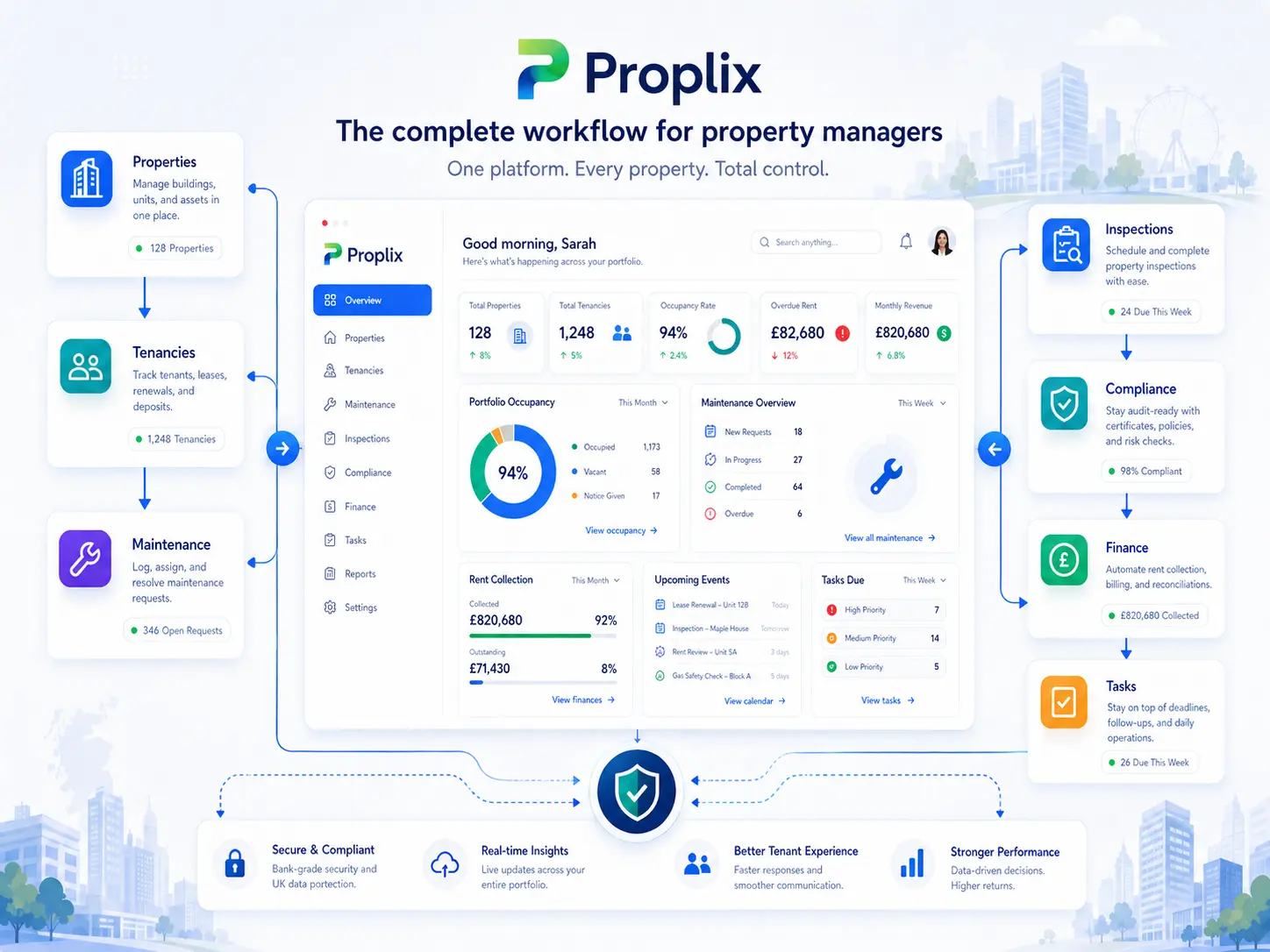
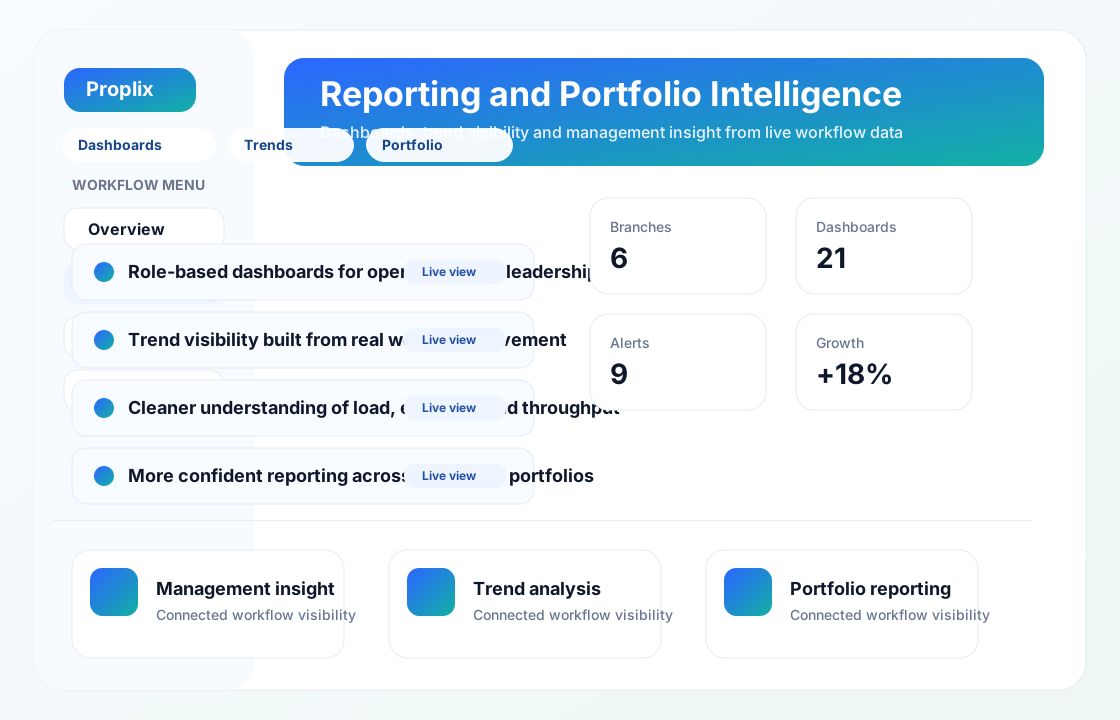
This illustration helps explain why property managers need one joined-up system for daily operations, supplier workflow, portfolio visibility, records and compliance movement rather than multiple disconnected tools.
Designed around the operating model
How Property Managers fits into dependable property operations
The strongest starting point is the work people actually complete, including the exceptions that rarely appear in a process diagram. Organisations may use similar property records while running very different services. The right solution reflects who owns each decision, how work moves between teams and what clients, residents, landlords or partners genuinely need to see.
Give each role enough context to act
Front-line teams need fast access to the current position, managers need an honest view of workload and risk, and external users need controlled visibility that reduces unnecessary chasing. Each audience should see the same underlying operation through an appropriate role-aware view. For Property Managers, that means access should follow an evidenced business need and change when responsibility changes.
Keep the reason beside the action
Service quality often weakens at the handover between enquiry, instruction, tenancy, maintenance, finance and compliance. Connecting those stages makes responsibility visible and helps the next person understand what has already happened before taking action. This makes the Property Managers record more useful during absence, escalation, service review or a later audit.
Design for the case that does not fit
Property work includes incomplete forms, late evidence, changed instructions, unavailable suppliers and circumstances requiring discretion. The system should expose those exceptions, preserve notes and direct them to an authorised person instead of silently forcing a misleading “complete” status.
Configure from representative work
A rollout works best when the organisation agrees its operating language, record ownership and exception routes before configuring screens. Pilot work should involve the people who complete the process, not only those who receive the final report. Document what remains outside the system as well, so teams understand the boundary between Proplix, connected services and professional responsibility.
Measure whether the work is improving
Useful measures include response consistency, outstanding actions, repeat data entry, time lost locating evidence and the quality of updates supplied to stakeholders. Those indicators show whether the operating model is becoming easier to manage. Review findings with the people completing Property Managers work, because a dashboard may not reveal the manual workaround being used beside it.
Keep guidance, permissions and records current
Ownership, legislation, services and internal policies change. Schedule periodic checks of access, templates, notifications, integrations and retained information. Record material changes and brief affected users so the configured workflow continues to reflect the organisation’s approved way of working.
Proplix supports structured workflow and evidence handling; it does not provide legal advice or remove the need for competent human review. Discuss your organisation, migration or integration requirements through the central secure enquiry route.
Discuss Property Managers requirements →What a well-run Property Managers process should make clearer
A member of staff opening the record should be able to understand its purpose, current status, owner and next meaningful action without first asking several colleagues for background. That does not mean every case follows an identical path. It means the agreed route is visible, departures are explained and supporting material remains beside the decision it informed. For Property Managers work, clarity is especially important when the case moves between teams or returns after a period of inactivity.
The day-to-day experience should also make uncertainty honest. Missing evidence, a disputed instruction or a review awaiting specialist input should be shown as an exception, not hidden behind a reassuring colour or forced completion state. Managers can then direct attention where it is useful, while staff retain a record of the checks already completed. This approach supports a more natural conversation with landlords, tenants, suppliers, clients and colleagues because updates come from a current operational record rather than a hurried reconstruction.
Good information design reduces unnecessary detail without removing useful context. Labels should use the language the organisation actually understands; permissions should reflect real responsibilities; and notifications should be reserved for events that require awareness or action. When every minor system event generates an alert, important work becomes harder to see. A considered Property Managers configuration therefore balances automation with judgement and gives authorised users a practical way to explain, reassign or escalate unusual work.
Implementation is not finished when data has been imported or users have received a login. Teams need time to test live examples, compare the configured route with policy, correct weak source information and agree how questions will be handled after launch. Early reviews should look for duplicated entry, private spreadsheets, unclear ownership and steps that users routinely bypass. Those observations are useful evidence: they show where the design, training or operating decision still needs attention rather than placing all responsibility on the person using the system.
Over time, the organisation should be able to show whether Property Managers work is becoming easier to complete and easier to explain. Useful evidence may include fewer avoidable chasers, faster retrieval, more complete handovers, better-quality submissions and a smaller backlog of unresolved exceptions. Measures should be read alongside real cases and user feedback. Proplix provides the connected workspace for that improvement, while accountable people remain responsible for policy, professional decisions and the service ultimately delivered.