ERP module guide
Documents, approvals and digital workflow inside a real estate ERP
One of the biggest hidden inefficiencies in property operations is document sprawl. Teams generate letters, reports, statements, evidence files, tenancy paperwork, notices, approvals, signatures and email attachments every day, but too many businesses still manage them as scattered output rather than part of the workflow itself.
A stronger ERP should treat documents as live operational assets. A document should belong to the right client, property, tenancy, repair, compliance action or financial event. Approvals should not disappear into mailbox chains. Staff should know what was issued, who approved it, which template was used, whether it was acknowledged and where the final record sits. That is how digital workflow becomes more dependable.
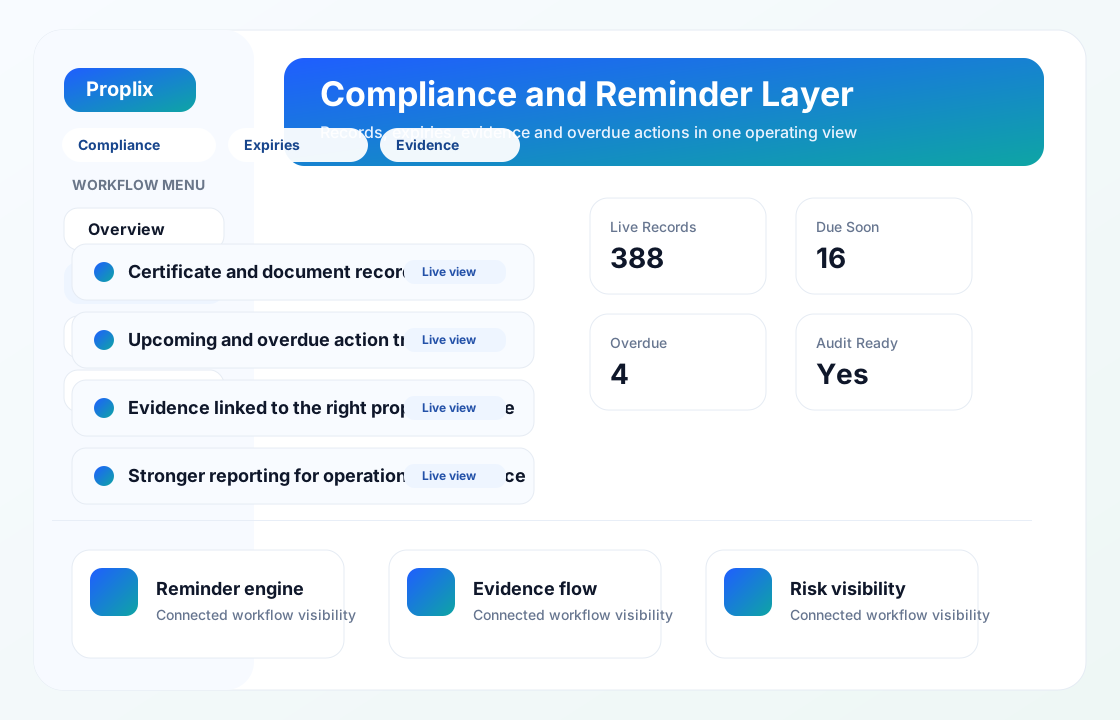
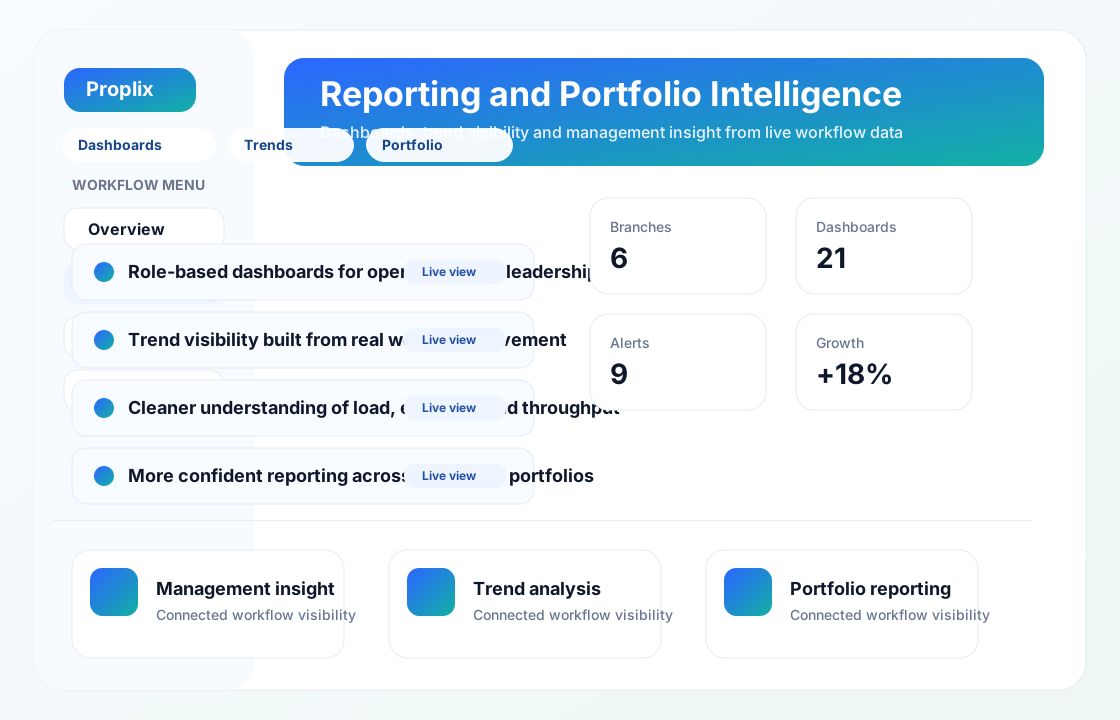
What this module should help the business do in practice
The more the business depends on repeatable communication and controlled records, the more important it becomes to bring document flow into the ERP rather than leaving it outside.
ERP value is created through connection, not through labels alone. In Proplix, each module becomes more useful when it reduces fragmentation, improves service consistency and gives staff and leadership a clearer operating picture.
Core functionality that should exist here
- Template-driven letters, notices and reports
- Linked files and evidence against the right record
- Approval steps, sign-off and acknowledgement history
- Audit trail for issue, change, review and finalisation
- Cleaner document governance across departments
Why this belongs inside the ERP instead of outside it
When this capability sits outside the ERP, teams usually lose continuity. Records have to be re-entered, context is diluted, stakeholders are split across systems and reporting becomes less reliable. By keeping this module inside the wider platform, the business can carry data, actions, financial context, document history and accountability forward more cleanly from one stage to the next.
That is why the ERP position is stronger than a standalone module position. The module still matters on its own, but its value rises sharply when it is part of one connected operating model.
How this capability fits the wider Proplix platform
Proplix presents documents, approvals & digital workflow as part of a full real estate ERP rather than as an isolated feature. Buyers want to know how the capability works alongside CRM, PMS, financials, compliance, portals, documents and reporting. Together, these connected capabilities form a strategic operating platform rather than a module catalogue.
Proplix explains each feature in the context of the wider operating model, so visitors can understand both the function itself and the business value created when it connects with CRM, property management, compliance, portals, finance and reporting.
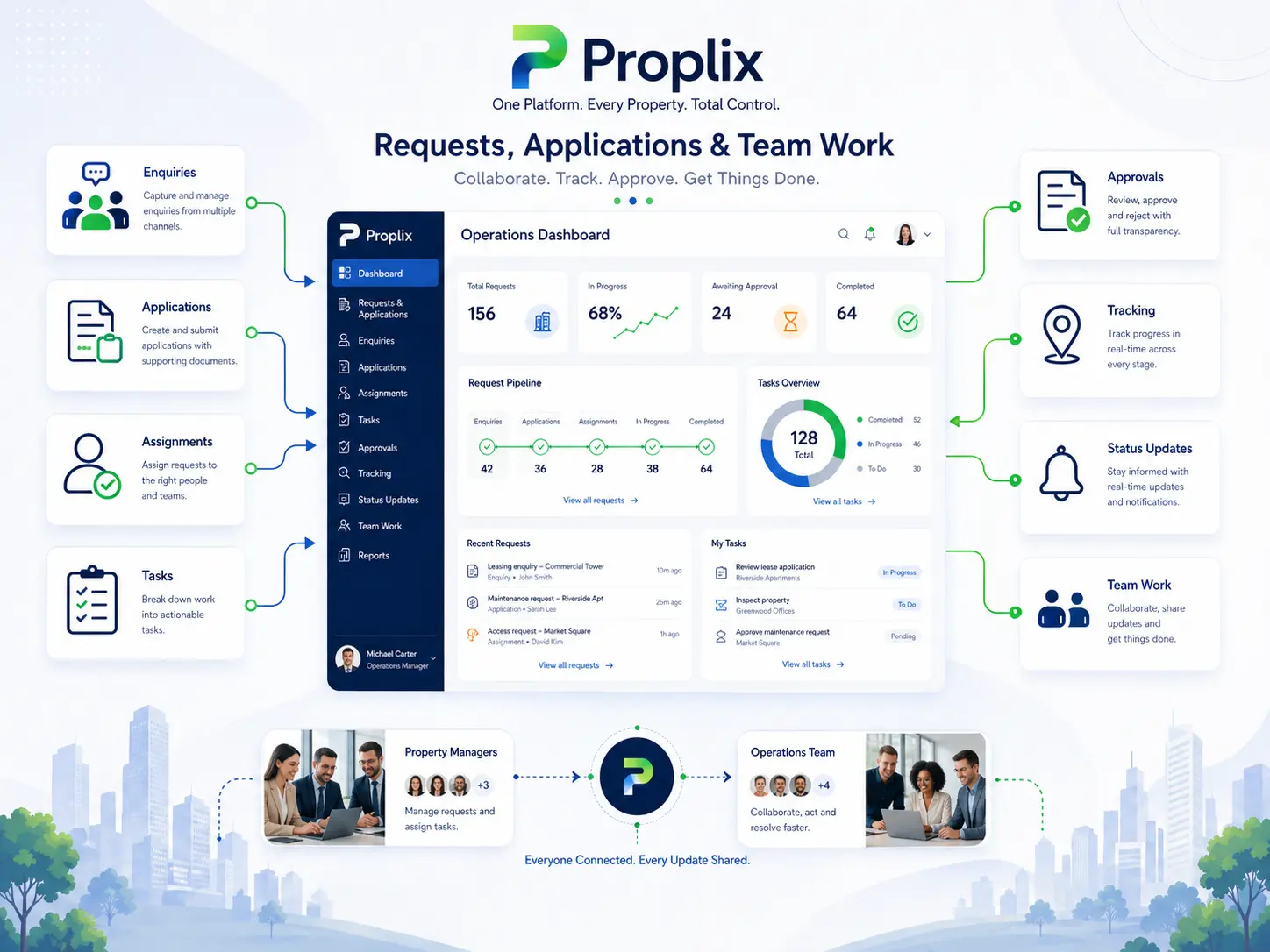
Platform illustration
A visual view of documents and approvals
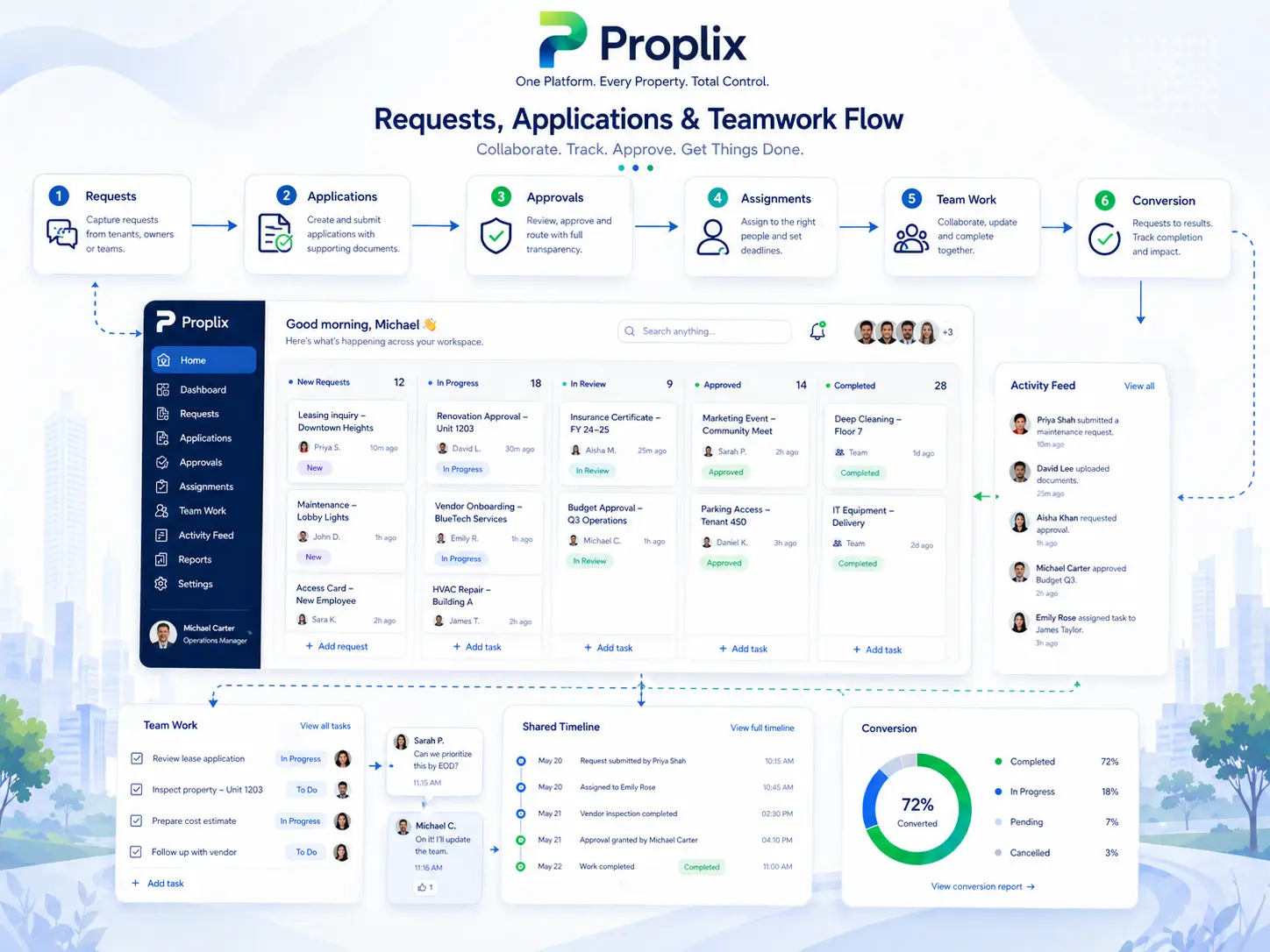
This illustration reinforces how document handling becomes stronger when letters, statements, notices, reports and approvals are tied directly to the right records and workflows rather than stored as scattered output.
Designed around the operating model
How Documents Approvals And Digital Workflow fits into dependable property operations
The strongest starting point is the work people actually complete, including the exceptions that rarely appear in a process diagram. Organisations may use similar property records while running very different services. The right solution reflects who owns each decision, how work moves between teams and what clients, residents, landlords or partners genuinely need to see.
Give each role enough context to act
Front-line teams need fast access to the current position, managers need an honest view of workload and risk, and external users need controlled visibility that reduces unnecessary chasing. Each audience should see the same underlying operation through an appropriate role-aware view. For Documents Approvals And Digital Workflow, that means access should follow an evidenced business need and change when responsibility changes.
Keep the reason beside the action
Service quality often weakens at the handover between enquiry, instruction, tenancy, maintenance, finance and compliance. Connecting those stages makes responsibility visible and helps the next person understand what has already happened before taking action. This makes the Documents Approvals And Digital Workflow record more useful during absence, escalation, service review or a later audit.
Design for the case that does not fit
Property work includes incomplete forms, late evidence, changed instructions, unavailable suppliers and circumstances requiring discretion. The system should expose those exceptions, preserve notes and direct them to an authorised person instead of silently forcing a misleading “complete” status.
Configure from representative work
A rollout works best when the organisation agrees its operating language, record ownership and exception routes before configuring screens. Pilot work should involve the people who complete the process, not only those who receive the final report. Document what remains outside the system as well, so teams understand the boundary between Proplix, connected services and professional responsibility.
Measure whether the work is improving
Useful measures include response consistency, outstanding actions, repeat data entry, time lost locating evidence and the quality of updates supplied to stakeholders. Those indicators show whether the operating model is becoming easier to manage. Review findings with the people completing Documents Approvals And Digital Workflow work, because a dashboard may not reveal the manual workaround being used beside it.
Keep guidance, permissions and records current
Ownership, legislation, services and internal policies change. Schedule periodic checks of access, templates, notifications, integrations and retained information. Record material changes and brief affected users so the configured workflow continues to reflect the organisation’s approved way of working.
Proplix supports structured workflow and evidence handling; it does not provide legal advice or remove the need for competent human review. Discuss your organisation, migration or integration requirements through the central secure enquiry route.
Discuss Documents Approvals And Digital Workflow requirements →What a well-run Documents Approvals And Digital Workflow process should make clearer
A member of staff opening the record should be able to understand its purpose, current status, owner and next meaningful action without first asking several colleagues for background. That does not mean every case follows an identical path. It means the agreed route is visible, departures are explained and supporting material remains beside the decision it informed. For Documents Approvals And Digital Workflow work, clarity is especially important when the case moves between teams or returns after a period of inactivity.
The day-to-day experience should also make uncertainty honest. Missing evidence, a disputed instruction or a review awaiting specialist input should be shown as an exception, not hidden behind a reassuring colour or forced completion state. Managers can then direct attention where it is useful, while staff retain a record of the checks already completed. This approach supports a more natural conversation with landlords, tenants, suppliers, clients and colleagues because updates come from a current operational record rather than a hurried reconstruction.
Good information design reduces unnecessary detail without removing useful context. Labels should use the language the organisation actually understands; permissions should reflect real responsibilities; and notifications should be reserved for events that require awareness or action. When every minor system event generates an alert, important work becomes harder to see. A considered Documents Approvals And Digital Workflow configuration therefore balances automation with judgement and gives authorised users a practical way to explain, reassign or escalate unusual work.
Implementation is not finished when data has been imported or users have received a login. Teams need time to test live examples, compare the configured route with policy, correct weak source information and agree how questions will be handled after launch. Early reviews should look for duplicated entry, private spreadsheets, unclear ownership and steps that users routinely bypass. Those observations are useful evidence: they show where the design, training or operating decision still needs attention rather than placing all responsibility on the person using the system.
Over time, the organisation should be able to show whether Documents Approvals And Digital Workflow work is becoming easier to complete and easier to explain. Useful evidence may include fewer avoidable chasers, faster retrieval, more complete handovers, better-quality submissions and a smaller backlog of unresolved exceptions. Measures should be read alongside real cases and user feedback. Proplix provides the connected workspace for that improvement, while accountable people remain responsible for policy, professional decisions and the service ultimately delivered.